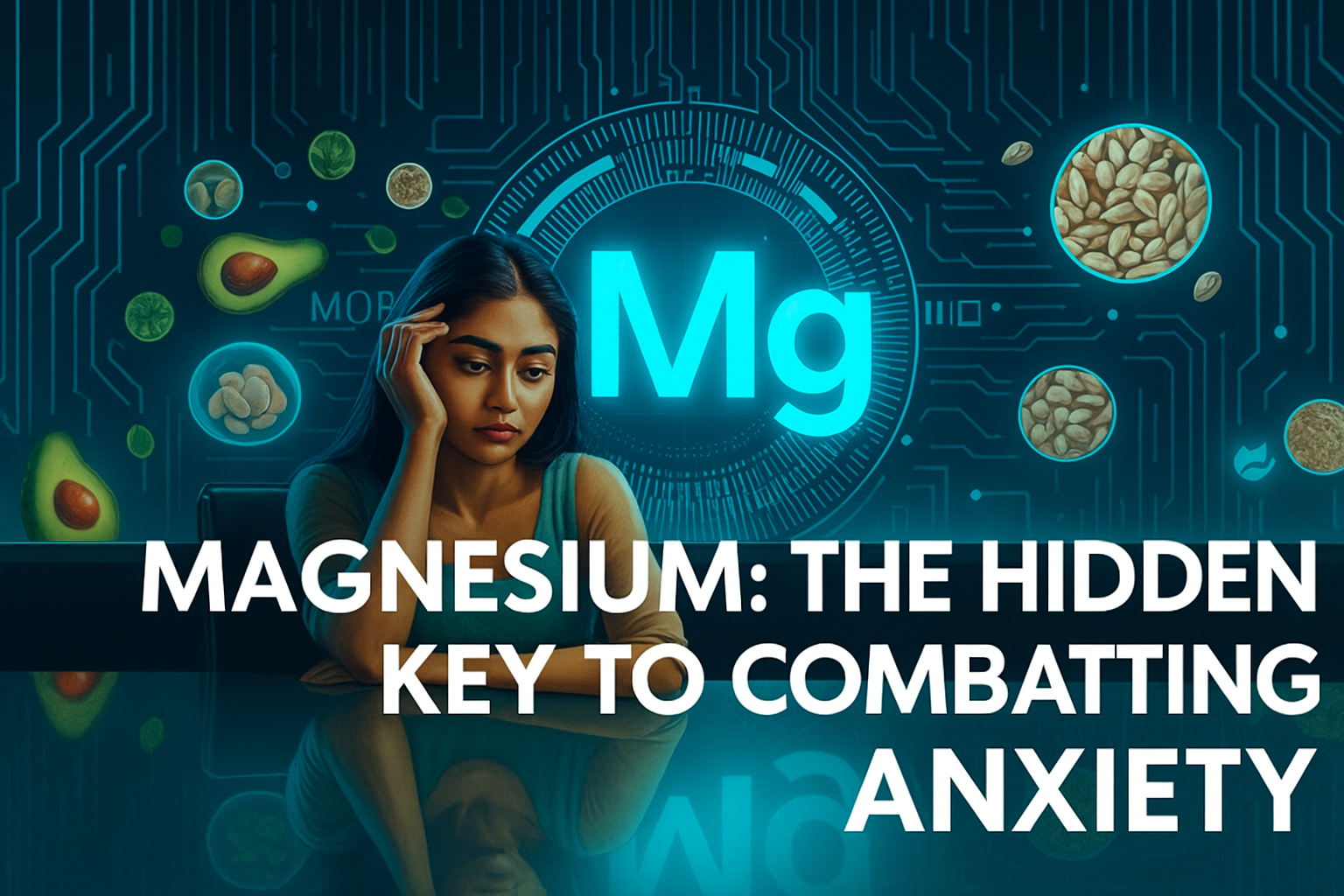

The Question That Sparked It All
It started with a question, as most things do in my house, from Chinni.
“Aunty, why do I feel like crying when I haven’t even studied yet?”
It was exam week. Chinni’s textbooks were piled around her like a barricade, her pencil tapping out the Morse code of teenage anxiety. Her question wasn’t rhetorical—and it made me pause. I could have talked about exam stress, cortisol, or adolescent pressure. But instead, I asked, “Have you been eating your greens?”
She blinked. “Does a mint chocolate count?”
We both laughed, but the question had already planted itself in my mind. Because when it comes to anxiety, we often reach for meditation apps or therapy (both valuable!), but we rarely ask: Could we be chemically under-equipped to stay calm?
And that, dear reader, is where our journey into magnesium begins.
The Invisible Deficiency in a Hypervisible World
Magnesium is the kind of mineral that doesn’t market itself well. It doesn’t come in neon packaging. It doesn’t taste sweet or give instant energy. But this shy, silvery element plays a starring role in over 300 biochemical reactions in your body—including the regulation of the very neurotransmitters that affect your mood.
Low magnesium levels have been linked to increased anxiety, irritability, and even panic attacks, according to multiple peer-reviewed studies—including one published in Neuropharmacology (Boyle et al., 2017).
And here’s the kicker: Up to 50% of people in industrialized nations are estimated to be magnesium deficient, often without knowing it.
Why? Because magnesium deficiency often shows up as feelings—tension, fatigue, brain fog—not obvious medical symptoms. It’s the kind of imbalance that hides in plain sight.
Ancient Cultures Knew, Even Without the Charts
When I mentioned magnesium deficiency to Mr. Raghavan, our local spice seller and folk medicine encyclopedia, he nodded sagely and said, “So that’s why our grandmothers kept forcing us to eat soaked almonds and sesame seeds in winter!”
He wasn’t far off.
Long before we had lab tests and supplement aisles, ancient cultures emphasized magnesium-rich practices intuitively:
- In Kerala, elders sipped water from large clay pots filled with soaked seeds like til (sesame) or garden cress, both rich in magnesium.
- In Greek medicine, bathhouses used magnesium sulfate (what we now call Epsom salts) to relax muscles and minds alike.
- Ayurvedic traditions valued ash gourd juice, drumsticks, and green banana stem—all magnesium sources hidden in local cuisine.
These weren’t random traditions. They were encoded wisdom—culinary rituals built on trial, error, and generations of embodied science.
The Modern Diet: Magnesium’s Quiet Exit
Let’s be honest. Most of us aren’t reaching for moringa leaves or sesame chutney in times of stress. We reach for screens, caffeine, or comfort carbs. And while I love a good bowl of dal-chawal, our modern plates—stripped of fiber, soaked in additives, and replete with refined sugar—have one thing in common: they’ve quietly pushed magnesium out of the picture.
Here’s the irony. The very things we consume during stress—coffee, sugar, alcohol—actually deplete magnesium even more. It’s like pouring water into a leaky bucket and wondering why you’re still thirsty.
And when magnesium levels drop, cortisol (our primary stress hormone) spikes more easily. Muscles remain tense. Sleep becomes shallow. The body forgets how to exhale.
The Science Behind the Serenity
Let’s talk mechanism—briefly, I promise.
Magnesium is a natural calcium blocker. It calms the nervous system by regulating the flow of calcium into neurons, which in turn controls the release of excitatory neurotransmitters like glutamate.
Think of magnesium as the wise village elder of your nervous system. It gently reminds overexcited neurons to calm down, take a breath, and not overreact to every bump in the road.
Clinical studies support this. A randomized controlled trial published in PLOS ONE (2018) found that daily magnesium supplementation significantly reduced mild-to-moderate anxiety—even in individuals without a clinical diagnosis.
And no, this isn’t about ditching therapy or meds. This is about supporting your body’s chemistry so that your mind isn’t fighting a losing battle.
What to Eat (and Why Grandma Was Right)
Now comes my favorite part—the food.
Here are some magnesium-rich additions to your plate, most of which also feature in ancestral diets across the world:
- Pumpkin seeds (magnesium bombs; great toasted with sea salt)
- Spinach and amaranth (pair with ghee or lemon to increase absorption)
- Methi (fenugreek) leaves—especially in parathas or theplas
- Ragi (finger millet)—one of the richest plant sources of magnesium
- Cacao nibs or dark chocolate (at least 70%)—yes, you can thank me later
- Sesame seeds (til)—roasted, in chutneys, or laddoos
- Avocados—if you’re riding the Instagram wellness train
- Soaked almonds—a bedtime ritual I still follow
And for those who prefer to sip rather than chew: Epsom salt foot soaks or ashwagandha-mulethi infusions are gentle, calming rituals that bring magnesium and nervous system support full circle.
Maya, the Skeptic, Enters Stage Left
When I told Maya, my best friend and skeptic-in-chief, that I was writing about magnesium and anxiety, she rolled her eyes.
“So now every mood is a mineral?”
I smiled. “Not every mood. But some storms can’t be calmed if you’re sailing with half a sail.”
To be fair to Maya, she has a point worth expanding. Even some scientists caution that while magnesium has been shown to correlate with reduced anxiety, the relationship is likely multifactorial—not always causational. In other words, magnesium might not cure your anxiety outright, but it could be the missing support beam in your mental health structure.
Later that week, she texted me a picture of a magnesium-rich seed mix she’d sprinkled on her salad. “Placebo or not, I slept better. Ugh. You win this round.”
What You Can Do Today
You don’t need a blood test or a supplement bottle to start rethinking how you nourish calm. Here’s what I’d suggest:
- Track Your Tension
When do you feel most irritable or fatigued? After coffee? Post-sugar? During PMS? Your body leaves breadcrumbs. - Revisit Ancestral Eating
What foods did your grandmother insist on during exam time or seasonal change? Start there. - Magnesium-Rich Meal Idea
Try this: ragi porridge with roasted sesame, soaked almonds, and jaggery. My grandmother called it “nerve tonic in a bowl.” - Move and Soak
Movement + Epsom salt soak is a combo as old as time. Ten minutes. One bucket. Zero side effects.
The Final Reflection
I don’t believe every anxiety stems from nutrition. But I do believe that we owe our bodies the respect of checking their foundations before assuming their failures.
Sometimes the mind’s cries are the body’s whispers left unheard.
So the next time you feel off-kilter, consider this: maybe it’s not just stress, hormones, or your job. Maybe it’s a quiet mineral, waiting to be invited back to the table.
And if you still need convincing—ask Chinni. She’s now eating methi theplas without complaint. Mostly.
We’d love to hear your thoughts. Let’s chat below!