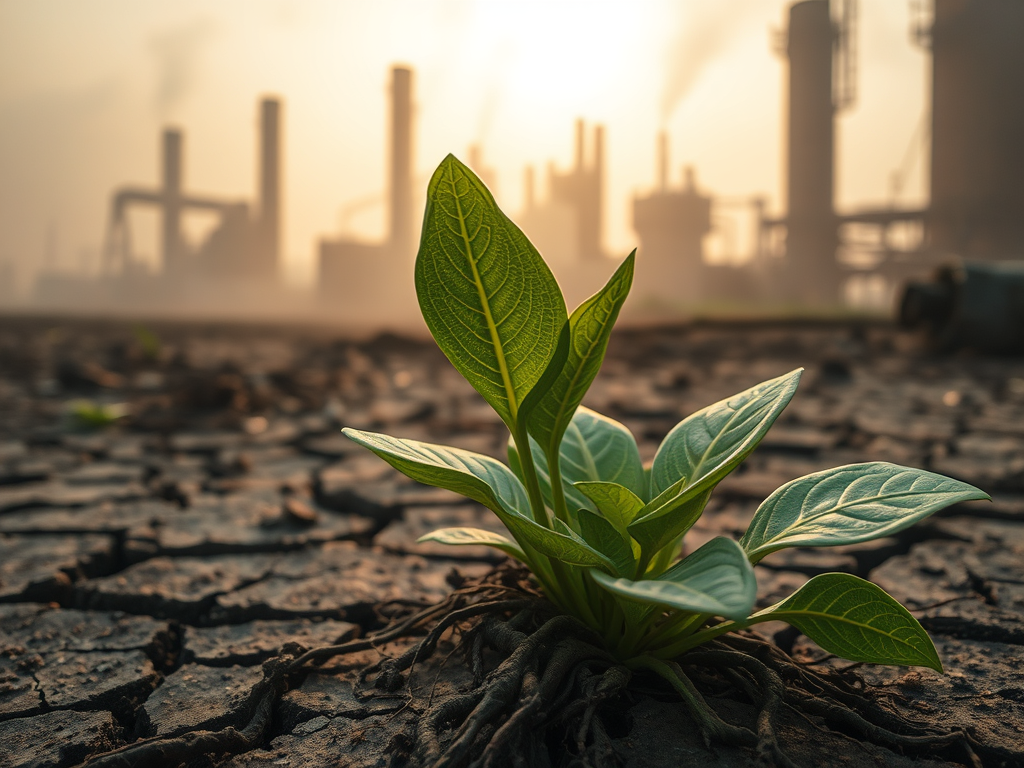

The first time I heard the phrase “metal-eating plant,” I imagined something straight out of a sci-fi comic—maybe a creeper that slurps up rusted gates in abandoned bungalows or a tree with leaves sharp enough to slice steel.
But as with so many things in nature, the truth is stranger, quieter, and infinitely more wondrous.
This story starts—not in a jungle or a lab—but in a corner of my balcony garden, where I was attempting to rescue a sad-looking spinach plant from a particularly aggressive colony of mealybugs.
In my desperation, I started reading up about how plants defend themselves.
That’s when I stumbled onto Rinorea niccolifera, a shy little shrub found in the Philippines. And oh boy, this unassuming green fellow doesn’t just defend—it devours.
🌿 Meet the Hyperaccumulators
Let’s back up a bit.
Most plants do their best to avoid metals. Too much zinc or copper in the soil? They’ll wither. Nickel? A death sentence.
But hyperaccumulators—this rare group of botanical rebels—seek it out.
They absorb heavy metals like nickel, zinc, and even cadmium, drawing them up from the soil and storing them in their leaves at levels that would kill most life forms.
Imagine a plant not just surviving in toxic waste—but thriving in it.
One such marvel is Rinorea niccolifera, discovered in a serpentine outcrop in the Philippines. Its leaves contain up to 18,000 micrograms of nickel per gram of dry weight.
To put that into perspective: it’s storing more than 1.8% of its weight in pure nickel. That’s like you or me carrying 20 kg of iron in our pockets and calling it a normal Tuesday.
And it’s not just one plant. Scientists have now documented over 700 species worldwide with this trait—from tiny herbs in Cuba to trees in New Caledonia.
❓ But Why Would a Plant Do That?
Shalini—my perpetually curious 12-year-old neighbor—asked the exact same thing when I told her about it during our Sunday science club.
“Akka, plants don’t even need nickel, right? Why would they drink poison?”
Great question.
Turns out, nature’s survival strategies are often beautifully weird. There are a few theories floating around:
1. Toxic Armor:
When herbivores nibble on a hyperaccumulator’s leaves, they get a nasty metallic surprise. Not very appetizing, right? It’s like the plant saying, “Sure, chew me—but enjoy your side of heavy metal toxicity.”
2. Microbial Warfare:
The metals in the leaves might ward off fungi and bacteria. A kind of internal disinfection system, if you will.
3. Sun Protection:
Some studies suggest that metals might help absorb excess light or UV radiation. Like wearing sunscreen—but hardcore.
And maybe, just maybe, we’ve seen hints of this before.
In medieval Europe, alchemists believed certain plants could transmute lead into gold.
Perhaps they were onto something—just centuries early and looking in the wrong places.
⛏️ Nature’s Metal Miners
What truly blew my mind was this: these plants are so efficient at extracting metals that scientists are now using them for something called phytomining.
Picture this: instead of blasting and polluting landscapes to mine nickel, we grow a field of hyperaccumulators on metal-rich soil. After a few months, we harvest the plants, burn the biomass, and extract the metal from the ash.
Voilà—green mining!
In a world obsessed with extraction by force, these plants offer a lesson in silent transformation.
It’s already being trialed in places like Malaysia and Albania. In fact, Phyllanthus rufuschaneyi—a close cousin of the Indian nellikai (gooseberry)—is being cultivated as a phytominer in Sabah.
Who would’ve thought a humble plant could replace the giant claws of industrial diggers?
Now, of course, there are challenges. These plants grow slowly. Metal yields are still modest compared to traditional mining. And the economic model isn’t perfect yet.
But the potential? Huge.
Especially in a world where we desperately need to rethink how we extract resources.
And here’s the haunting beauty—this isn’t just new-age science.
Indigenous Australian lore speaks of “poison soils” where only sacred trees would grow—guardians of the land’s hidden memory.
Somewhere between folklore and field study, a truth hums through the roots.
🍃 A Leaf That Could Save Land
One of the most heartening applications is in cleaning up polluted land.
See, many abandoned mines and industrial zones are so saturated with heavy metals that nothing grows. The soil is dead.
But some hyperaccumulators can slowly heal it—drawing out the toxins over time.
It’s slow magic. Patient green alchemy.
Ravi Uncle, my retired physics teacher neighbor, calls it “botanical judo”—using the very thing that kills to nourish and rebuild.
Like growing hope from poison.
🌱 Bangalore’s Own Toxic Garden?
Now, don’t get too excited. We don’t have Rinorea or Phyllanthus rufuschaneyi growing in Cubbon Park just yet.
But India does have its share of metal-accumulating plants.
One study found that certain varieties of Brassica juncea—our beloved mustard plant—can absorb lead from contaminated soils.
Imagine, your sarson da saag could one day double as a soil detox agent.
(Just don’t eat that batch, please.)
There’s also Alyssum murale, a European plant that’s being trialed in Himachal’s abandoned mines for nickel cleanup.
And researchers at IISc have been experimenting with native grasses that might work in our industrial zones.
I sometimes wonder—what if the green patches near Peenya or Whitefield, long neglected and brown with dust, could one day become living detox zones?
📱 The Hidden Cost of Metals
Here’s the thing. Every smartphone, every laptop, every e-bike battery depends on metals like nickel, cobalt, lithium.
And the way we mine these today? Often destructive. Often exploitative.
So if a field of plants could give us even a fraction of that—with no explosions, no displaced villagers, no poisoned rivers—isn’t that worth exploring?
Maybe these quiet green miners, growing in forgotten corners of the world, are showing us a gentler way to live with the Earth.
✨ A Metal-Leafed Meditation
I’ll admit—I’ve started looking at leaves differently now.
That little veined structure you brushed aside this morning on your walk? It might be a vault. A shield. A sponge for poison. A quiet act of resilience.
So many of nature’s tricks hide in plain sight.
Like that spiderweb glistening in morning light. Or the way a banyan sends down roots like dancers mid-spin.
Or yes—the plant that eats metal, not for glory, but to quietly keep the soil breathing.
🧭 One Last Thought
Next time you’re in your garden—or even just walking past a scraggly shrub by the roadside—pause. Wonder.
Ask: What is this plant surviving? What invisible story is it telling?
Nature’s appetite is not just for sunshine and rain.
Sometimes, it craves what we fear.
And in doing so, it teaches us how to transform the toxic into something strangely beautiful.
So, tell me—have you ever spotted a leaf that didn’t look quite right?
Silvery, maybe. Or oddly stiff? Maybe it wasn’t sick.
Maybe it was hungry.
Because sometimes, the smallest leaf is holding the biggest secret: how to survive what should have killed you.
And if you ever do find a silvery leaf in the dust, take a moment.
Nature might be showing you how it survives—with softness, not strength.
🍃 Related Reading
• The Hidden Memory of Leaves: Nature’s Silent Storytellers
• Journey to the Center of the Earth—For Real
• The Fermi Paradox: Are We Really Alone in the Universe?
• Why the Universe Might Look Random—But Isn’t
• The Spiritual and Health Benefits of Eating with Your Hands
We’d love to hear your thoughts. Let’s chat below!