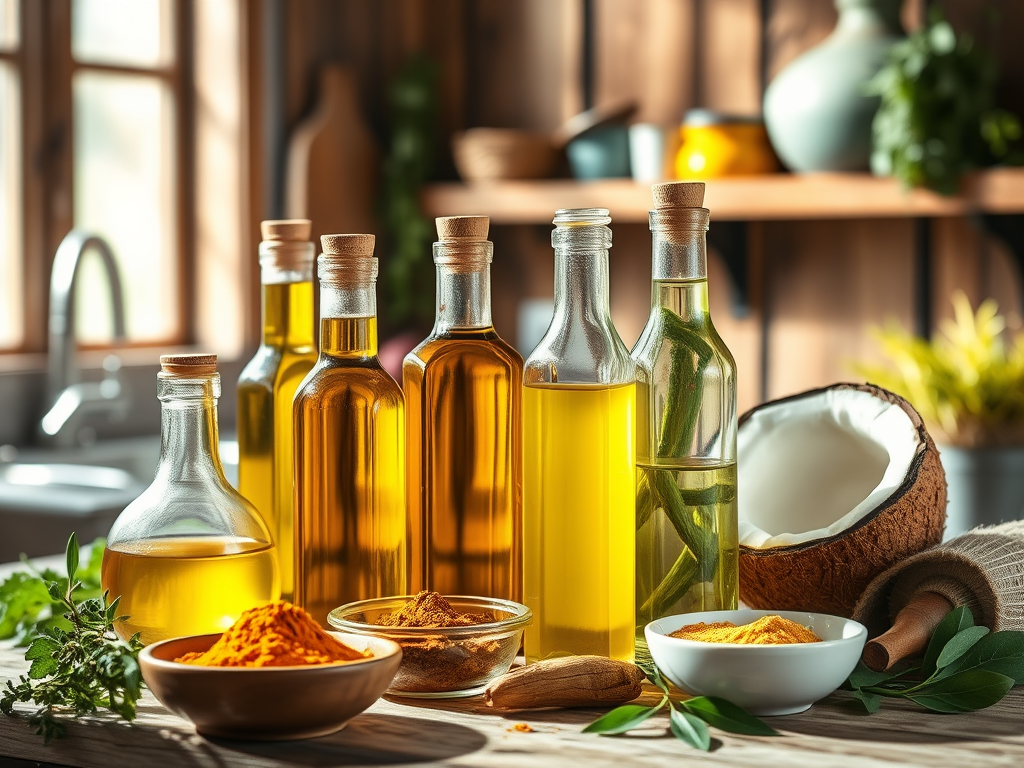

“As is the oil, so is the offering.” — Rig Veda
It started, as many things do in my life, with Chinni.
She was standing in my kitchen, squinting at a bottle of cold-pressed sesame oil.
“Wait,” she said, “Isn’t this the same oil you use for oil pulling and stir-frying bhindi? How can that even work?”
Ah, the magic of oils—and the confusion.
We live in an age where coconut oil is alternately crowned a miracle and vilified as saturated fat, where argan oil has jumped from Moroccan hammams to global beauty aisles, and where ghee now graces both Ayurvedic rituals and Michelin-starred menus.
But here’s the thing: Not all oils are created equal. And more importantly, not all oils do their best work in every situation.
Today, let me walk you through five remarkable oils that belong both in your kitchen and on your vanity shelf—and more crucially, when to reach for each.
1. Sesame Oil: The Ancient All-Rounder
🌿 Best for:
Daily cooking, oil pulling, scalp massages, dry skin in winter
🕰️ When:
Morning oral hygiene, cool or dry seasons, before bathing
If Ayurveda had a favorite oil, this would be it.
Sesame oil—known as tila taila in Sanskrit—is revered for its warming, grounding properties. Rich in vitamin E, lignans, and antioxidants, it penetrates deeply into tissues, making it perfect for both culinary and topical use.
🕉️ “Charaka called it ‘snehana shreshtha’—the most nourishing of all oils.” That lineage continues today in Ayurvedic clinics and family homes alike.
Historically, it was used not just in food but also in abhyanga (Ayurvedic self-massage), as a base in medicinal decoctions, and in oil pulling to strengthen gums and detoxify the mouth.
Modern science echoes this wisdom: studies show sesame oil has anti-inflammatory and antibacterial properties, and may help reduce plaque and gingivitis.
📝 Asha’s tip: Warm it slightly before massaging your scalp—it nourishes the roots and calms an overactive mind. But skip it for high-heat frying—it has a relatively low smoke point.
2. Coconut Oil: The Tropical Transformer
🌿 Best for:
Baking, sautéing, moisturizing, taming frizz, oil pulling
🕰️ When:
Summer months, tropical or humid weather, post-sun exposure
When I visited Kerala last summer, I noticed something delightful: people there didn’t just use coconut oil, they trusted it. For their food, their babies, their skin, their temples.
That trust isn’t unfounded. Coconut oil contains lauric acid, a medium-chain fatty acid with strong antimicrobial properties. It also has occlusive properties, meaning it seals moisture in—ideal for skin that’s lost its bounce.
🌴 There’s a saying in Kerala: “If you have coconut oil and turmeric, you need little else.”
And the science is catching up. A 2022 review in the Journal of Cosmetic Dermatology confirmed coconut oil’s effectiveness in reducing transepidermal water loss and improving skin barrier function.
But beware the overhype: Coconut oil is comedogenic for some skin types. And while it’s stable under heat, its high saturated fat content means moderation is key in the kitchen.
📝 Asha’s tip: Use it post-beach or post-sun to soothe your skin. And try it in your rice—just a teaspoon adds flavor and improves satiety.
3. Olive Oil: The Mediterranean Marvel
🌿 Best for:
Salad dressings, dips, light cooking, cuticle care, anti-aging skin routines
🕰️ When:
Evenings, colder months, when skin feels dull or inflamed
Olive oil made its debut in my home thanks to Mr. Raghavan’s tale of an ancient Greek athlete who oiled his body before every match and lived to 102. It was probably apocryphal—but it got me curious.
Cold-pressed extra virgin olive oil is rich in monounsaturated fats and polyphenols. It’s a friend to your heart and your skin. Topically, it works as an emollient and antioxidant—perfect for dry patches and gentle makeup removal.
🕊️ In Hippocratic texts, olive oil was called “liquid medicine”—used for digestive and dermatological issues alike.
One caveat? It has a lower smoke point than you’d think. Save it for low to medium heat—or better yet, drizzle it raw.
📝 Asha’s tip: Combine a teaspoon of olive oil with a squeeze of lemon and a pinch of Himalayan salt for an instant, skin-loving salad dressing.
4. Mustard Oil: The Bold Reviver
🌿 Best for:
Stir-frying, winter curries, warming body massages, scalp stimulation
🕰️ When:
Winter mornings, pre-shower, before intense activity
This is the oil my grandmother swore by. Every Sunday, she’d warm a small bowl and rub it into my scalp, narrating stories of mustard fields blooming gold across Punjab.
But one moment stays etched deeper.
When I had my first heartbreak at 19, my mother didn’t say much. She just warmed mustard oil, parted my hair, and massaged my scalp in silence. To this day, I associate its scent with being held when words didn’t work.
Mustard oil is a pungent powerhouse. Rich in omega-3 fatty acids, selenium, and glucosinolates, it’s anti-bacterial, anti-fungal, and excellent for circulation.
🌾 In Punjab, elders still say: “Sarson ka tel, sardiyo ka saathi”—Mustard oil, the winter friend.
And in some Bengali homes, a single drop of mustard oil is added to clay lamps during Kali Puja—to summon light with strength.
Fun fact: It creates a warming sensation due to allyl isothiocyanate—a compound that stimulates blood flow. That’s why it’s a winter hero for achy joints and sluggish skin.
📝 Asha’s tip: If using it for cooking, always heat it until it reaches its smoking point first—this neutralizes its harshness. And test a patch before applying it to your skin—it can be too intense for sensitive types.
5. Argan Oil: The Luxurious Lightweight
🌿 Best for:
Hair serums, facial oils, nail strengthening, dry lips
🕰️ When:
Nighttime skin routines, post-bath hydration, before styling hair
Argan oil is often marketed as “liquid gold”—and while I tend to roll my eyes at such labels, in this case it’s somewhat earned.
Harvested from the argan tree in Morocco, this oil is rich in vitamin E, ferulic acid, and essential fatty acids. It’s incredibly lightweight, making it ideal for facial skin, especially in dry or aging skin types.
🌟 In Berber tradition, argan oil was pressed by hand and shared during ceremonies marking transitions—births, marriages, new seasons.
And in some North African regions, it was rubbed onto wooden prayer beads to keep them supple and gleaming.
While not a cooking oil traditionally, some regions use food-grade argan in dips and couscous. But I keep this one on my vanity, not my plate.
📝 Asha’s tip: Press a drop or two onto the cheekbones after applying your night cream. You’ll wake up glowing.
🛑 Bonus: Black Cumin Oil – The Healer’s Secret
Used for centuries across Egypt, Persia, and the Indian subcontinent, black cumin oil—kalonji ka tel—has been called “habbat al barakah” in Arabic: “the seed of blessing.”
It’s peppery, potent, and packed with thymoquinone—an antioxidant studied for its anti-inflammatory and immune-modulating effects.
I don’t cook with it, but I keep a vial on my shelf. When I feel a cold coming on, I dab a drop under my nose or mix it with honey and warm water.
It’s not glamorous, but it works. And sometimes, that’s enough.
The Oils, The Uses, The Seasons
| Oil | Cooking Use | Skin/Hair Use | Best Season |
|---|---|---|---|
| Sesame | Low-medium heat stir-fry, soups | Oil pulling, scalp massage | Winter/Spring |
| Coconut | Baking, sautéing | Moisturizing, oil pulling, hair care | Summer/Humid |
| Olive | Raw dressings, dips | Facial oil, anti-aging, makeup removal | All year, esp. fall/winter |
| Mustard | Indian curries, tadkas | Warming body massage, hair oil | Winter |
| Argan | Rarely used in food | Night serum, cuticles, frizz control | Year-round |
| Black Cumin | Not for cooking | Cold relief, skin healing, nasal oiling | Year-round |
Bridging Ancient Rituals and Modern Science
What fascinates me most about oils is not just their chemical composition, but the stories they carry. The ritual of warming sesame oil before dawn. The crackle of mustard seeds in a Bengali kitchen. The Moroccan hammam where women passed down argan oil secrets like heirlooms.
Science validates much of this. But even where research is catching up, the felt experience remains—a kind of embodied knowing that doesn’t always need a citation.
I never did answer Chinni’s question fully. But maybe that’s the beauty of oils—they work in ways logic can’t always explain.
These oils don’t just nourish skin or spice dal. They carry memory. They carry care.
In every bottle of oil, there’s a bit of sunlight, a field, a hand.
And when we use it with care, we continue a lineage older than language.
Maybe next time Chinni asks, I’ll simply say: oils don’t just work. They remember.
We’d love to hear your thoughts. Let’s chat below!