
Let Me Set the Scene
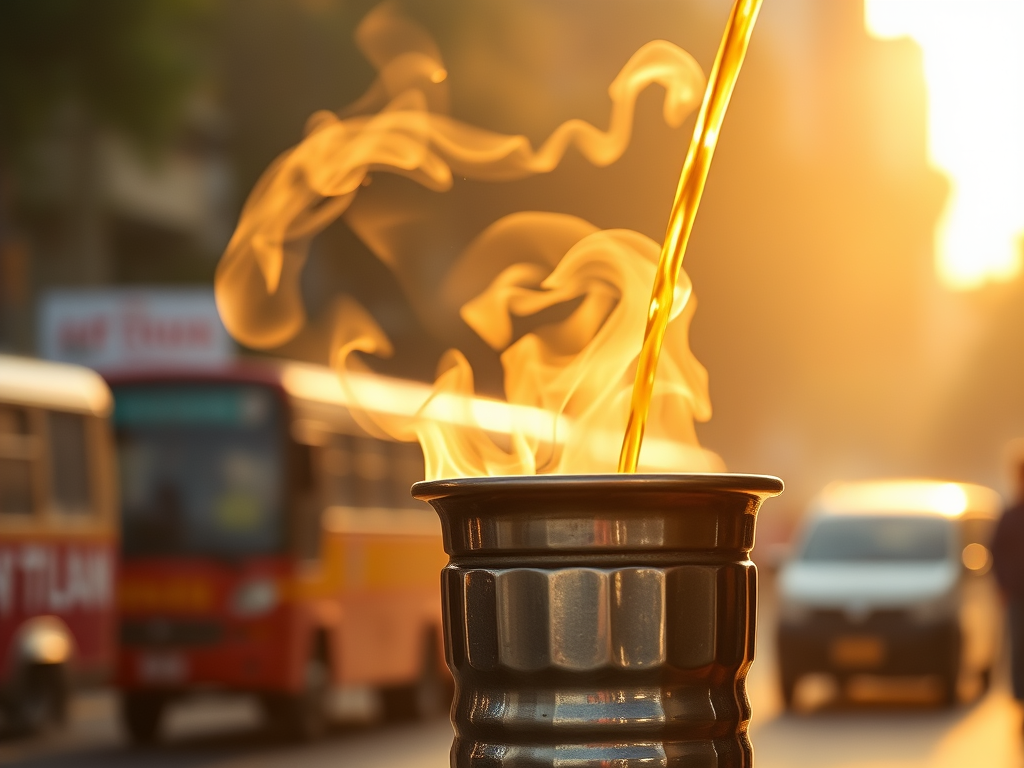
It’s 6:48 a.m. The city is still stretching. Somewhere near Shivajinagar, Mr. Murthy is opening his filter kaapi stall. The steel counters are already fogged with condensation. A cycle bell dings, a bus honks in the distance, and the air smells faintly of jasmine, diesel, and roasted chicory.
And then—it happens.
That first, steaming steel tumbler of filter coffee. Thick, rich, velvety. Poured from a height so the stream arcs in the morning air like a dancer mid-leap. I wrap my fingers around the cup and just… wait.
Because, as any true Bangalorean knows—you never gulp filter coffee straight off the boil.
You wait.
You sip.
You let it cool just enough.
But here’s the question I found myself scribbling into my journal last week: Why does filter coffee cool just right? Not too fast, not too slow. Not like that wimpy paper-cup cappuccino that turns cold in five minutes. And definitely not like soup, which stays mouth-burning hot for an eternity.
Turns out, the answer is a glorious little dance of physics, heat transfer, and—yes—thermodynamics.
A Liquid Lesson in Heat Loss
Every hot drink cools eventually, right? That’s just basic thermodynamics: heat flows from a hotter object to its cooler surroundings until both reach thermal equilibrium.
But how that happens—the rate, the texture of cooling, the feel of it on your lips—depends on some sneaky variables.
Let’s break it down.
There are three main ways your coffee loses heat:
- Conduction – from the liquid to the metal cup and then to your hand or table.
- Convection – from the liquid’s surface to the surrounding air.
- Radiation – infrared heat radiating into the air (a small contributor here).
Now imagine filter coffee in its traditional steel tumbler-and-dabarah combo. That wide-mouthed bowl isn’t just a cultural quirk—it’s a cooling machine.
By increasing the surface area exposed to air, the dabarah allows more efficient convective cooling. Pouring from a height aerates the liquid, disperses steam, and further promotes cooling.
But here’s where it gets cool (pun intended): the specific rate at which filter coffee cools seems to hit this sweet spot. Fast enough to drink in a couple of minutes, but slow enough to savour. Not lukewarm, not scalding. Just right.
Why?
Specific Heat and the Genius of Milk
Let’s geek out for a moment.
Filter coffee isn’t just water. It’s mostly milk—that too, full-fat, lovingly boiled till it thickens just a bit. Milk has a higher specific heat capacity than water. This means it takes more energy (and time) to heat or cool it.
So while water cools quickly, milk-based drinks hold on to their warmth longer—creating that comforting temperature plateau where the coffee feels warm and cozy on your tongue without burning.
Add to this the dense decoction—coffee brewed slow and strong—that brings its own thermal mass into the mix.
But the real hero? Emulsion.
Milk is an emulsion of fat globules in water. This structure slows down heat transfer. The fat traps warmth and releases it gently—kind of like a thermal buffer.
In essence, your filter coffee is a tiny heat-retention marvel engineered by generations of practice and instinct.
Pour, Swirl, Sip: Rituals of Cooling
Have you ever watched Mr. Murthy pour kaapi from one vessel to another?
Not just once. Multiple times. From steel tumbler to dabarah. Back and forth. Long streams. Short arcs. Sometimes with a flair that would put cocktail bartenders to shame.
This isn’t just for show.
It’s a form of forced convection. Each pour cools the coffee slightly by exposing more surface area to air. It also mixes the hot top layer with the cooler bottom, evening out the temperature.
In fact, if you’re in a rush and want to cool your coffee faster, pouring it back and forth speeds up the process—without sacrificing flavor or turning it cold.
But the brilliance doesn’t stop at the ritual. It lives in the design.
Design That Thinks in Heat
One morning, I asked Ravi Uncle—our resident trivia factory—why South Indian filter coffee is served in those specific steel tumblers.
He beamed. “Ah, that’s a legacy of material science! Stainless steel conducts heat rapidly, so you feel the warmth on your fingers—but it also survives daily wear, resists bacteria, and doesn’t retain flavor like plastic or ceramic.”
Turns out, the tumbler’s thermal conductivity helps dissipate heat to your hand and surroundings just enough to lower the coffee’s temperature—but not too much. Combine that with the wide dabarah, and you’ve got the equivalent of a low-tech temperature regulator.
Even the shape—the low, broad dabarah—optimizes surface exposure, promoting gentle convective cooling in humid Bangalore mornings. Kind of like our own little stovetop solar system, with swirling heat and gravity-like pour arcs, keeping the balance just right.
And all this thoughtful design—dabarahs, pouring arcs, emulsion, steel—leads to one perfect moment:
The Sip Window
Studies show the ideal hot beverage temperature is between 54–58°C (that’s about 130–136°F). This is the “pleasant warmth” zone—hot enough to feel cozy, but not so hot that you burn your tongue.
Guess what range filter coffee tends to settle into within 2–3 minutes of serving? Yep. Right in the pocket.
It’s like our grandmothers intuitively mastered heat transfer laws while multitasking chutney grinding and dosa flipping.
Why Filter Coffee Tastes Better in the Rain
You know this one.
Monsoon hits Bangalore. Roads are flooded, autos are floating sideways, and everyone’s damp and cranky. But then—someone hands you a steel tumbler of hot filter kaapi. And suddenly, the world rights itself.
Scientifically, there’s a reason it feels so good.
Cooler ambient temperatures (like during rain) increase the temperature gradient between the coffee and the air. That means the drink loses heat faster—but also feels warmer by contrast.
Your senses sharpen. The aroma intensifies in humid air. The warmth on your palms feels like a hug. And the cooling rate—again—feels perfect.
It’s not magic. It’s thermodynamics tuned to monsoon mood.
A Lesson in Patience
There’s something poetic here too.
Filter coffee asks you to wait. To pour, swirl, and pause. To feel the heat on your fingertips and the swirl of steam on your face. To listen to autos honking and sparrows bickering as the coffee cools—not just in degrees, but in attitude.
In a world of instant pods and microwave mugs, filter coffee reminds us that thermodynamics has a rhythm. That heat, like life, flows—but with purpose and beauty when we let it.
Maybe that’s the real genius: the ritual cools us, too.
Final Sips
Next time you cradle that steel tumbler—pause.
Notice how it doesn’t scald or chill. How it invites.
You’re not just sipping a drink. You’re holding a perfectly engineered system of heat transfer, material science, sensory design, and cultural memory—in one small steel cup.
So maybe ask yourself: what else in your daily life arcs like a morning pour—mid-air, weightless, precise—obeying physics while warming something deeper?
🕸️ Related Reading
• The Fermi Paradox: Are We Really Alone in the Universe?
• Unveiling Golden Milk: The Journey of Haldi Doodh
• How Spider Silk Inspires Super-Strong Materials: Lessons from Nature’s Engineers
• The End of Death? Digital Afterlives and Memory Forever
• Dragonfly Flight Secrets: Nature’s Ingenious Aerodynamics
We’d love to hear your thoughts. Let’s chat below!