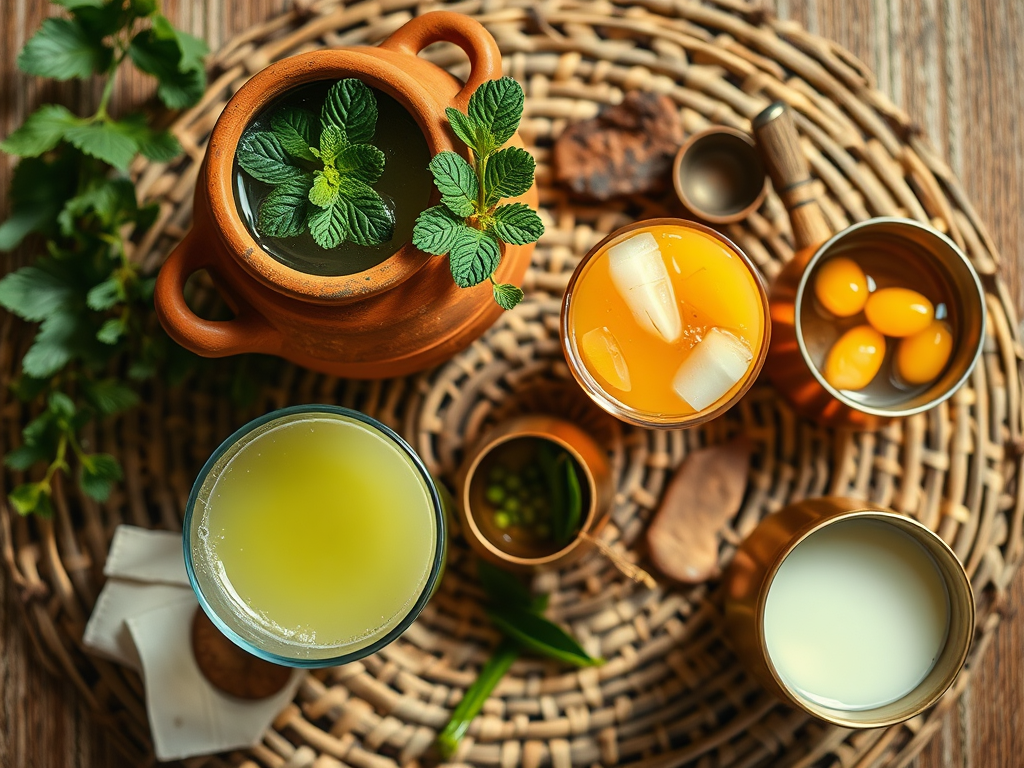

It was 43°C in Pune last week. The kind of heat that wraps itself around your spine and clings. I found myself in Mr. Raghavan’s spice shop, fanning my face with a neem leaf and watching him sort dried kokum like ancient coins.
“Watermelon again?” he asked, with the kind of side glance that only a man who’s seen fifty summers and fifteen trends can give.
And that’s when it hit me.
Summer foods have become predictable. Watermelon, cucumber, ice cream. Rinse and repeat. But our ancestors—across India and beyond—had a much richer vocabulary for cooling the body when the sun scorched the sky.
So, today, let’s go beyond watermelon. Let’s walk through kitchens, farms, and festivals—global and local—to rediscover the forgotten wisdom of real cooling foods.
🧊 What Does It Mean to “Cool” the Body?
Before we bite into bael or sip on barley, let’s understand what “cooling” actually means.
In Ayurveda, foods are classified based on their virya—their energetic effect on the body. Cooling foods (sheeta virya) calm pitta dosha, the fire-energy associated with heat, inflammation, and acidity.
In Traditional Chinese Medicine (TCM), it’s the yin quality that’s sought in cooling foods—moisture-rich, gentle, and nourishing to organs like the liver and lungs.
Modern science, of course, speaks in other terms—hydration, electrolyte balance, thermoregulation, and anti-inflammatory compounds. But here’s the beautiful twist: often, these three languages—Ayurvedic, Chinese, and clinical—all point to the same foods. Let’s explore some.
🥣 1. Barley Water – The Forgotten Electrolyte Drink
My grandmother kept a terracotta pot of barley water on the veranda during summer. A splash of lemon. A hint of pink salt.
Barley is a naturally cooling grain in Ayurveda and TCM alike. It contains beta-glucans that not only soothe the gut but also regulate blood sugar—two things that spike easily in summer stress.
A study published in the Journal of Nutrition and Metabolism found that barley water helps in lipid regulation and internal cooling during periods of heat stress.
👉 Try This: Soak 2 tbsp of barley overnight. Boil, strain, chill, and flavor with lime, mint, and a pinch of jaggery.
🌍 Global Echo: In Japan, a similar tradition lives on through Mugicha, a roasted barley tea served cold and beloved in the hottest months.
🌸 2. Kokum – The Malvani Secret
You may know kokum as a souring agent in Goan curry, but in coastal Maharashtra, it’s a summer elixir.
This deep purple fruit is packed with garcinol, a powerful anti-inflammatory compound. In konkanastha households, kokum sherbet isn’t just tasty—it’s a digestive, coolant, and mild antidepressant.
A 2012 study in Phytotherapy Research highlighted kokum’s antioxidant profile and gastroprotective properties.
👉 Try This: Kokum + cumin + black salt + jaggery = your new go-to summer cooler.
🌍 Global Echo: In parts of Africa and Latin America, hibiscus tea (Agua de Jamaica) offers a similarly tangy, cooling, antioxidant-rich refreshment.
🥛 3. Buttermilk – The Probiotic Air Conditioner
Yes, lassi is popular. But real cooling lies in buttermilk—the lighter, churned residue after butter is removed. In Tamil Nadu, it’s called mor. In Karnataka, majjige. In Gujarat, chaas.
Buttermilk carries live cultures that support gut microbiota, essential for digestion and immunity—both challenged in summer.
Chinni once asked me, “Why does grandma put curry leaves and ginger in her buttermilk?”—which opened the door to explaining carminatives, gut flora, and how science finally caught up with spice.
👉 Try This: Buttermilk with grated cucumber, roasted cumin, and a pinch of hing. Cooling, calming, and excellent for skin.
🌍 Global Echo: In the Middle East, it’s called Laban, and in Turkey, Ayran—both salty, probiotic yogurt drinks meant to refresh.
🍵 4. Sattu – Bihar’s Answer to Gatorade
Sattu—a roasted gram flour drink—has fueled farmers for centuries. It’s protein-rich, fiber-dense, and exceptionally cooling.
In fact, sattu balances pitta and reduces body fatigue according to classical Ayurvedic texts. Modern nutrition backs this up with its low glycemic index and high mineral content.
👉 Try This: Mix 2 tbsp sattu with cold water, lemon, pink salt, and mint. Stir well. Sip slowly.
🌍 Global Echo: Mexico’s Pinole, a roasted maize drink used by endurance runners, shares sattu’s stamina-boosting and heat-resisting power.
🍈 5. Bael (Wood Apple) – The Gut’s Summer Guardian
The bael fruit—tough on the outside, syrupy-sweet within—is a powerhouse for summer digestion. It binds, cools, and calms an irritated gut.
In Ayurveda, bael is considered tridoshic—balancing all three doshas—with a special knack for pitta. It’s loaded with tannins and mucilage, which protect the intestinal lining.
👉 Try This: Bael pulp + cold water + a touch of jaggery = summer nectar for your gut.
🌍 Global Echo: In Southeast Asia, bael iced tea is a cherished herbal infusion—fragrant, cooling, and gut-soothing.
🥬 6. Amaranth Greens (Chaulai) – The Cooling Iron Boost
Often overlooked in favor of spinach, amaranth leaves are sheeta in Ayurveda and rich in calcium, iron, and vitamins A & C.
Cooked lightly with garlic and coconut, they make a mineral-rich side dish that strengthens blood and reduces summer fatigue.
👉 Try This: Stir-fried amaranth leaves with sesame and grated coconut.
🍹 7. Nannari Syrup – The Root Elixir of Tamil Nadu
Made from the roots of Indian sarsaparilla, Nannari syrup is sweet, earthy, and slightly medicinal. It’s revered for reducing body heat and aiding urinary health.
Root-based cooling remedies appear in many cultures—Mexican aguas frescas with hibiscus, African tamarind teas, and Japanese barley tea (mugicha). Nannari holds its own in this global chorus.
👉 Try This: Mix 2 tsp Nannari syrup with chilled water, lime, and crushed ice. Thank me later.
🌍 Global Echo: In Thailand, pandan or root-based summer teas serve a similar refreshing, grounding purpose.
🥥 8. Tender Coconut Water – The Mineral Symphony
We’ve normalized it, but we haven’t fully appreciated it. Tender coconut water contains potassium, magnesium, and cytokinin—a hormone believed to have anti-aging effects.
In TCM, it nourishes yin and clears heat. In Ayurveda, it pacifies pitta and cools the digestive tract.
👉 Try This: Fresh is best. Don’t overdo it—once daily is plenty, especially for those with high sugar levels.
💧 Cooling from the Outside In
Summer cooling isn’t just about what we eat—but how we soothe the body from head to toe.
Topical and edible remedies like aloe vera pulp, soaked sabja seeds, rosewater drinks, and even a sandalwood paste on the forehead can ease the heat, calm the mind, and slow down the nervous system.
Sometimes, cooling means being cool—not doing more.
🌍 Summer Wisdom Across Cultures
🗾 Japan: Mugicha (roasted barley tea)
🇬🇷 Greece: Tzatziki (cucumber-yogurt dip)
🇲🇽 Mexico: Agua de Tamarindo
🇹🇷 Turkey: Ayran (salty yogurt drink)
🌍 Africa: Hibiscus iced tea
🇮🇩 Indonesia: Cendol (cool coconut-jelly dessert)
These foods aren’t just delicious—they’re embedded with wisdom about what the body needs when the sun blazes high.
🍹 A Deeper Sip: Agua de Tamarindo & Mugicha
In Mexico, Agua de Tamarindo is more than a tangy treat—it’s a cultural anchor. Tamarind pulp, lime, and jaggery come together in a drink that balances blood sugar, aids digestion, and quenches deeply.
Meanwhile in Japan, Mugicha is the childhood memory of summer break—its nutty, roasted aroma a signal to rest. Served cold, it’s caffeine-free and rich in antioxidants, loved for calming internal heat and nourishing yin.
When cultures oceans apart reach for similar remedies, you know it’s not trend—it’s truth.
❄️ The Cooling Isn’t Just in the Food
Let’s not forget: cooling is also about how we eat.
- Timing matters: Avoid heavy lunches at noon when the sun is highest.
- Texture soothes: Slippery foods like sabja seeds, aloe vera pulp, and soaked chia create a cooling “mouthfeel” that signals relief to the nervous system.
- Cooking style counts: Steamed, boiled, or raw-prepared meals trump deep-fried fare in the heat.
Maya, my skeptic-in-chief, recently said, “Isn’t all this just placebo?” I smiled. Even if it were, the placebo effect is evidence of the mind-body connection. And in summer, when tempers rise with the mercury, maybe what we need most is food that tells our bodies: “You’re safe. You’re cool. You can rest now.”
🌱 Final Reflection
Cooling foods aren’t just about beating the heat. They’re about listening—to your body, your climate, your ancestry.
In a world obsessed with superfoods and viral health hacks, perhaps the true wisdom lies in your grandmother’s buttermilk, your farmer’s sattu, and that kokum sherbet Mr. Raghavan makes with a hint of smug pride.
So this summer, I invite you to go beyond watermelon. Try a new old recipe. Taste a culture not your own. Ask your elders what they ate when the earth was hot and the fans hadn’t yet spun.
And maybe that’s the real gift of summer foods—not just to quench, but to quiet. A hush in the heat. A mother’s hand on a fevered forehead.
And when you do—write to me. Tell me what cooled your body… and maybe your soul.
—
If something here brought back a memory, sparked curiosity, or made you rethink summer eating, leave a like—or pass it on. After all, wellness grows when stories are shared. 🌸
📚 Related Reading
🔗 Unveiling Golden Milk: The Journey of Haldi Doodh
🔗 You Don’t Need a Supplement—You Need a Spice Cabinet
🔗 Understanding Inflammation: The Fire Within Us
🔗 Global Skincare Rituals for Natural Glow
🔗 The Truth About Ghee: Ancient Superfood or Modern Health Hazard?
We’d love to hear your thoughts. Let’s chat below!